Showing posts with label rest. Show all posts

August 19, 2016

The Grateful Dead - A Follow Up

I received a great question on my Grateful Dead post that I'd like to follow up on here.
Could you clarify what you mean 'The more dead you are in life, the more alive you’ll be after death', is this related to cessation and/or no self? Do you have any fear of death? What is best to emphasize in practice to achieve this?
Yes, it’s definitely related to cessation and no self. But just about any practice should be a good preparation for death if you develop it to an industrial strength level of "CC&E". 

Sometimes it's useful to distinguish death in the sense of no longer existing, from death in the sense of going through the dying process. Noting Gone would probably be a good preparation for death in the sense of no longer existing. Noting Gone leads to an appreciation of the paradoxical richness of Nothing. A life of noting Gone is a life of intimacy with the richness of death. That's what I meant by the somewhat enigmatic claim: "the more dead you are during life, the more alive you'll be after death." 

Regarding, preparation for the dying process, familiarity with restful states and familiarity with expansion and contraction can be helpful. Basically, when a baby comes into the world, it does so through the peristalsis of its mother's womb. That peristalsis represents the expansion and contraction that pervades of all of nature. When we pass out of existence, those same polar forces grind away the somethingness of self and world. If things go well, you’ll re-identify with those forces, and become your formless parent—thus, in a sense, “sidestepping” your personal demise. Not everyone is fortunate enough to experience the dying process that way. On the other hand, almost anyone can experience the dying process in terms of ever-deepening states of pleasant rest: visual rest (darkness or bright light), auditory rest (mental talk gets wiped away, the ear defocuses), and body rest (you're so exhausted that you don't want to move even a tiny bit. This can induce a continuous and profound global relaxation). When I'm asked to guide someone through the dying process, I typically have them focus on See Rest, Hear Rest, Feel Rest, and it almost always works. Of course, I'm usually working with people who already have a meditation practice, but not inevitably. I've also had success using rest states to facilitate the passing of non-meditators.

Am I afraid of death? All I can say is this: I have no doubt that if I had not done all those decades of practice, I would be quite concerned on a daily basis with the prospect of my own mortality (I turned 72 a few days ago). That doesn't seem to be happening much. To be honest, I have no idea of what my reaction will be when the end comes. However I am quite confident that some part of me will know exactly what to do, regardless of what may arise. 

August 8, 2013

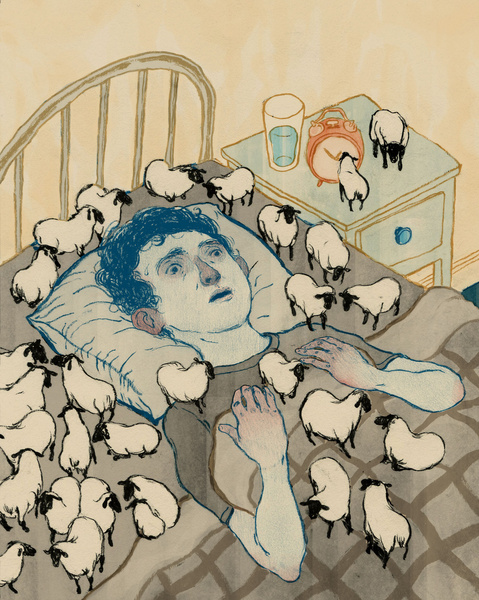
Help for Insomnia: Yet Another use for Mindfulness

(c) Tony Huynh
Difficulty falling asleep or staying asleep is a very common complaint. Mindfulness can help but one must first radically revision the nature of the problem.

People tend to get into a negative feedback loop with insomnia: Not getting to sleep leads to worry, leads to further difficulty sleeping, leads to more worry, leads to…. What to do? One possibility is to start thinking about the night in a different way. This is a conceptual reframing, a profoundly different paradigm regarding the issue of sleep.

The normal paradigm is:
"I have to get a good night's sleep or I'll be a mess tomorrow".

The new paradigm is
"If I get a good night's rest, I'll be fine tomorrow".

Amazingly, it's possible to get a good night's rest without necessarily sleeping much or at all. Two things are required:

(1) that the body get rest by lying very still and corpse-like.
(2) that the consciousness get rest by engaging in a systematic focusing technique.

It does not matter which technique(s) you use, although something from the Focus on Rest technique family would probably be a natural first candidate to try—see Chapter 3 in the Five Ways manual. If none of those techniques work, you might consider Focus In (to “divide and conquer” the agitation), or Nurture Positive, or Do Nothing…whatever interests you most.

It may be hard to believe that you can be deeply refreshed after a night of little or no sleep (but lots of relaxation and concentration). Confidence in this truth comes with time and experience. You may also discover that letting go of the preoccupation with getting sleep ironically brings sleep.

In addition to using Mindfulness in this way, other factors should also be considered. Sleep scientists have a long, standard list of suggestions to facilitate a good night’s sleep. You can easily get this information from the Internet or consulting directly with a sleep medicine specialist. To the extent that their suggestions help, you can utilize them. To the extent that they do not help, you can utilize the mindfulness strategy described above.

Over the years, I’ve worked with many people who have sleep disorders spanning a wide range of intensities and causalities. My field experience tells me that the following formula almost always works.


  • Utilize the suggestions of sleep experts.
  • Stop worrying about staying asleep all night.
  • Get fascinated with learning to rest all night.
  • Train yourself in that skill by keeping the body deeply relaxed and maintaining a focus technique as continuously as possible.
  • Be patient. Skill deepens with time.
Resource: