August 14, 2013

Transparent Dharma Dialogue

There's a growing group of people worldwide who advocate what might be described as "transparent dharma dialogue."  Transparent dharma dialogue has two characteristics:
  1. A willingness to speak openly and frankly about anything and everything one personally experiences in the course of practice, and 
  2. a willingness to question the standard formulations of historical Buddhism.
I think that this is a very good trend but I also think that it is best carried out from a place of lightness and humor (and, therefore, by implication, a place of genuine humility).

Among bloggers in this field, my friend ~C4Chaos provides a great example of the lightness and humor criterion. If you want to have some fun, check out his latest:


August 8, 2013

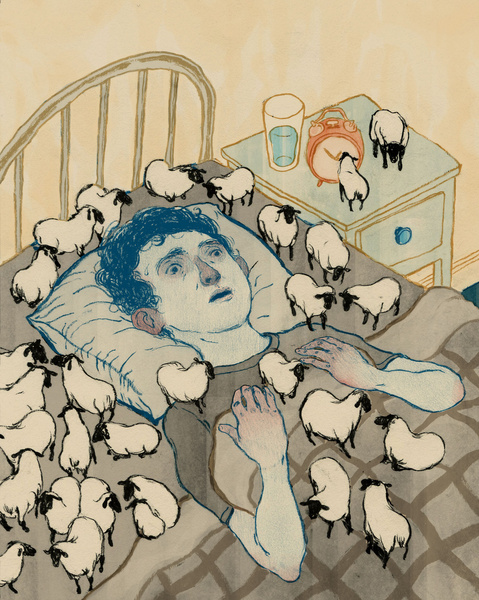
Help for Insomnia: Yet Another use for Mindfulness

(c) Tony Huynh
Difficulty falling asleep or staying asleep is a very common complaint. Mindfulness can help but one must first radically revision the nature of the problem.

People tend to get into a negative feedback loop with insomnia: Not getting to sleep leads to worry, leads to further difficulty sleeping, leads to more worry, leads to…. What to do? One possibility is to start thinking about the night in a different way. This is a conceptual reframing, a profoundly different paradigm regarding the issue of sleep.

The normal paradigm is:
"I have to get a good night's sleep or I'll be a mess tomorrow".

The new paradigm is
"If I get a good night's rest, I'll be fine tomorrow".

Amazingly, it's possible to get a good night's rest without necessarily sleeping much or at all. Two things are required:

(1) that the body get rest by lying very still and corpse-like.
(2) that the consciousness get rest by engaging in a systematic focusing technique.

It does not matter which technique(s) you use, although something from the Focus on Rest technique family would probably be a natural first candidate to try—see Chapter 3 in the Five Ways manual. If none of those techniques work, you might consider Focus In (to “divide and conquer” the agitation), or Nurture Positive, or Do Nothing…whatever interests you most.

It may be hard to believe that you can be deeply refreshed after a night of little or no sleep (but lots of relaxation and concentration). Confidence in this truth comes with time and experience. You may also discover that letting go of the preoccupation with getting sleep ironically brings sleep.

In addition to using Mindfulness in this way, other factors should also be considered. Sleep scientists have a long, standard list of suggestions to facilitate a good night’s sleep. You can easily get this information from the Internet or consulting directly with a sleep medicine specialist. To the extent that their suggestions help, you can utilize them. To the extent that they do not help, you can utilize the mindfulness strategy described above.

Over the years, I’ve worked with many people who have sleep disorders spanning a wide range of intensities and causalities. My field experience tells me that the following formula almost always works.


  • Utilize the suggestions of sleep experts.
  • Stop worrying about staying asleep all night.
  • Get fascinated with learning to rest all night.
  • Train yourself in that skill by keeping the body deeply relaxed and maintaining a focus technique as continuously as possible.
  • Be patient. Skill deepens with time.
Resource:

August 1, 2013

From Fuzz to Buzz: Suggestions for Breaking Through Sleepiness During Meditation Practice

Many people have issues around sleep. They may get sleepy when they want to be alert (i.e., during meditation practice) or they may have difficulty falling asleep or staying asleep when they want to (i.e., they have insomnia). Sadly, some people have both issues. I plan to address the insomnia piece in a future blogpost. In this blog, I’d like to offer some practical suggestions around the sleepiness piece.
sleepy meditator
illustration by M.Zittel

In the Buddhist tradition, there’s a term that translates into English as “sinking.” (In Japanese, it’s called konjin; in Tibetan it’s called chingwa). This term is quite generic, covering the whole range from subtle fuzziness to complete loss of consciousness. The remarks below are applicable to any point on that range. 

There’s an objective side to sleepiness and there’s a sensory side to sleepiness.

The objective side involves two things:

1.    One’s body posture.
2.    One’s degree of alertness.

The sensory side also involves two things:

1.    Pleasant states associated with being sleepy.
2.    Unpleasant states associated with being sleepy.

That gives a total of four components (two objective and two sensory). The trick in dealing with sleepiness is to work optimally with these four components.

On the objective side:

1.    With regards to posture: one has to fight over and over to re-establish good posture:
·       Straighten the spine.
·       Force the eyes open if need be.
·       Stand up.
·       Etc., etc.

2.    With regards to alertness, one has to fight against its loss:
·       The posture piece can help;
·       Forcing yourself to speak labels out loud can also help;
·       But basically, it’s a function of time and practice, and will.

On the sensory side:

1.    With regards to the unpleasant sensory side of the experience, try to accept the uncomfortable sensations of sleepiness in the body: Greet them with equanimity until they turn into a flowing energy. You may have had the experience of a pain or an itch breaking up into flow. It’s hard to believe, but the same thing can happen with uncomfortable sleepy sensations. You can “watch them to death.” At that point, they turn into a kind of energy that circulates around your body, inflating you with vitality.

2.    The pleasant sensory aspect of sleepiness are the restful states (See Rest, Hear Rest, and especially Feel Rest in the form of muscle relaxation). Try to notice that sleepiness comes in waves. Each wave of sleepiness carries two things:

·       a wave of unconsciousness which we should fight with, and
·       a wave of restfulness which we can detect and enjoy.

Here’s an example of what I mean. Try to notice that at the onset of each wave of sleepiness, there is a tendency for the whole body to relax (that’s why people lurch). But if you tangibly detect that relaxation, you won’t lurch—you’ll just drop a notch into deeper repose. So each new wave of sleepiness becomes a new wave of settledness. Wave by wave, second by second, you drop deeper and deeper. It’s attentional jujitsu. Objective unconsciousness is your opponent. With this trick, you use his weight to your advantage!

Detecting the pleasure of sleepiness clearly and enjoying it without craving allows you to re-engineer the experience of sleepiness into the experience of jhānic absorption.